Yes, Strategic supply chain management plays a critical role in business development. By aligning supply chain operations with overall business goals, it helps companies streamline processes, reduce costs, manage risks proactively, and respond quickly to market changes. This strategic approach not only enhances efficiency and customer satisfaction but also supports long-term growth, competitiveness, and profitability.
Key Takeaways
- Strategic Alignment: Supply chain decisions should directly support business goals and long-term strategy.
- Value Creation: Beyond cost reduction, strategic SCM improves speed, agility, scalability, and customer satisfaction.
- Data-Driven Insights: Analytics, forecasting, and integrated platforms enable smarter, faster, and more informed decisions.
- Risk Management & Resilience: Proactive strategies reduce disruptions, manage risks, and ensure consistent operations.
- Continuous Improvement: Performance measurement and optimization drive sustainable growth and long-term competitive advantage.
- Customer-Centric Approach: Aligning supply chain operations with customer needs enhances reliability, delivery speed, and overall satisfaction.
What Is Strategic Supply Chain Management?
Strategic Supply Chain Management refers to the long-term planning and coordination of supply chain activities to support overall business strategy and competitive advantage. Unlike operational supply chain management, it focuses on high-level decisions that influence cost efficiency, scalability, risk control, and service performance over time.
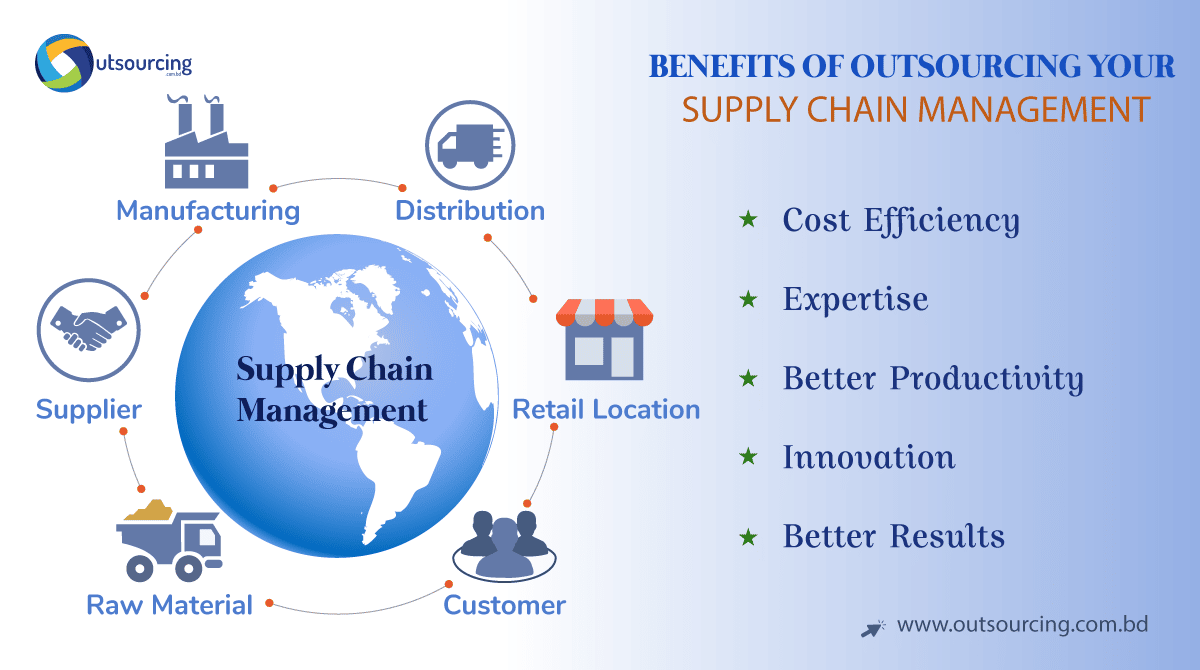
By aligning sourcing, production, logistics, inventory, and distribution with corporate objectives, strategic supply chain management ensures that supply chain activities directly contribute to profitability, operational efficiency, and customer satisfaction. This approach enables businesses to adapt to market changes, strengthen resilience, and achieve sustainable growth.
Key Points of Strategic Supply Chain Management:
- Enhances scalability and business growth
- Improves cost efficiency and profit margins
- Improves service quality and customer satisfaction
- Strengthens risk management and supply chain resilience
- Aligns supply chain activities with overall business strategy
- Focuses on long-term planning rather than short-term operational tasks
Types of Supply Chain Management
1. Traditional Supply Chain Management
- Uses a reactive approach to handle risks and disruptions.
- Prioritizes short-term cost reduction and operational efficiency.
- Suitable for businesses with stable demand and predictable processes.
- Focuses on day-to-day operations such as procurement, production, logistics, and inventory management
2. Strategic Supply Chain Management
- Emphasizes long-term alignment with overall business objectives.
- Supports scalability,sustained competitive advantage,and business growth.
- Focuses on proactive risk management and building supply chain resilience.
- Helps companies adapt to changing markets, enhance customer satisfaction, and remain competitive in both local and global markets.
Traditional vs. Strategic Supply Chain Management (SCM)
| Aspect | Traditional SCM | Strategic SCM |
|---|---|---|
| Focus | Daily operations, logistics, and moving goods from point A to B. | Long-term value creation, business growth, and ecosystem alignment. |
| Time Horizon | Short-term (daily, weekly, or monthly). | Long-term (3–5 year vision and beyond). |
| Decision Level | Tactical and Operational (Managers/Supervisors). | Executive and Boardroom level (C-suite/Owners). |
| Objective | Immediate cost reduction and functional efficiency. | Sustained competitive advantage and market differentiation. |
| Risk Management | Reactive: Responds to issues and disruptions after they occur. | Proactive: Anticipates market changes, trends, and potential disruptions. |
| Technology | Manual processes, spreadsheets, and legacy systems. | Data-driven; utilizes AI, IoT, and real-time analytics. |
| Relationship | Transactional; focused on price negotiation with suppliers. | Collaborative; focuses on strategic partnerships and shared goals. |
| Inventory | Stockpiling and bulk ordering to ensure availability. | Optimized and lean; uses demand forecasting to minimize waste. |
Why Is Strategic Supply Chain Management Important for Businesses?
Strategic supply chain management is essential because it directly supports profitability, customer satisfaction, and long-term business resilience. By taking a strategic approach, businesses can respond quickly to market changes, manage supply chain risks, and maintain consistent service levels. Rather than functioning solely as a cost center, a strategic supply chain becomes a driver of competitive advantage, operational efficiency, and sustainable growth.
Key benefits include:
- Improved cost control and profit margins
- Better scalability and long-term business growth
- Stronger risk management and disruption readiness
- Consistent service quality and customer satisfaction
- Faster response to market shifts and customer demand
Strategic Supply Chain Impact on Business Development
Strategic supply chain management is essential for business growth and long-term success. By aligning supply chain operations with overall business goals, companies can improve efficiency, reduce costs, and respond quickly to market changes. A well-planned strategic supply chain also enhances customer satisfaction and strengthens competitiveness.
Key Benefits of Strategic Supply Chain Management:
- Proactively manages risks and disruption
- Streamlines operations and reduces inefficiencies
- Supports scalability and long-term business growth
- Lowers operational costs and improves profitability
- Enhances customer satisfaction and service reliability
How Strategic Supply Chain Management Creates Business Value
Strategic supply chain management drives business growth, efficiency, and competitive advantage. By aligning supply chain operations with corporate strategy, companies can reduce costs, respond faster to market changes, manage risks proactively, and enhance customer satisfaction in local and global markets.
Core Value Drivers: Cost optimization, faster delivery, proactive risk reduction, scalable operations, and reliable customer service that build trust and loyalty.
Role of Strategy in Supply Chain Decisions: Ensures supplier selection, network design, outsourcing, technology investments, and regulatory compliance support long-term business objectives.
Technology and Data in Strategic SCM: Analytics, demand forecasting, automation, and integrated platforms improve supply chain visibility, operational efficiency, and decision-making for global and regional markets.
Conclusion
Strategic Supply Chain Management is essential for businesses operating in both local and global markets. By integrating long-term planning, advanced technology, and proactive risk management, companies can reduce costs, improve operational efficiency, and enhance customer satisfaction.
A well-designed strategic supply chain not only drives sustainable growth and resilience but also strengthens competitive advantage. Businesses that focus on strategic SCM are better positioned to respond to market changes, outperform competitors, and achieve long-term success across regional and international markets.
Frequently Asked Questions (FAQ)
To align supply chain activities with business strategy and maximize long-term value and competitive advantage.
No. Businesses of all sizes can benefit, especially when scaling operations or managing risk.
It is an ongoing process. Initial improvements can appear in months, but full maturity takes years.
Yes, but its primary goal is total value creation, not cost reduction alone.