Incorporating a company in Bangladesh marks the crucial transition from a simple business idea or a sole proprietorship to a formal, legally distinct corporate entity. This process, which is mandatory for businesses seeking professional stability, external investment, and limited liability protection. The entire registration and regulatory framework is overseen by the Registrar of Joint Stock Companies and Firms (RJSC).
A properly registered company gains legal personality, allowing it to enter contracts, own property, sue, and be sued in its own name. For any Bangladeshi entrepreneur aiming for long-term sustainability, scaling operations, and attracting formal financing, understanding and completing this meticulous process is the indispensable first step toward building a trustworthy corporate brand.
Key Takeaways
- Authority: RJSC is the only government body for company incorporation in Bangladesh.
- Popular Structure: Private Limited Company is most common for start-ups and SMEs.
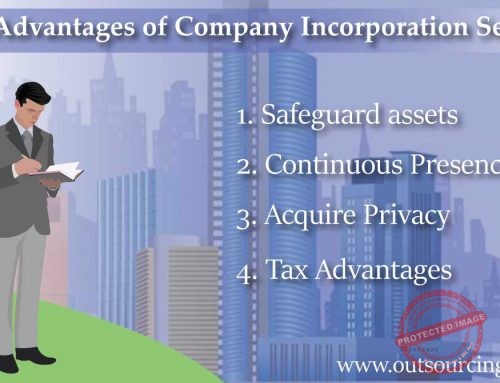
- Key Benefit: Limited liability protects owners’ personal assets.
- First Step: Registration begins with RJSC name clearance.
- After Incorporation: Trade License, TIN, and VAT (BIN) registration are required.
Types of Companies for Bangladeshi Entrepreneurs
The choice of company structure significantly impacts your legal obligations, governance requirements, and ability to raise capital. For Bangladeshi entrepreneurs, the decision is usually between three key types, each defined by its structure and purpose.
1. Private Limited Company (PLC)
The PLC is the backbone of the Bangladeshi corporate sector and the most common choice for start-ups and Small to Medium-sized Enterprises (SMEs).
2. One Person Company (OPC)
The OPC is a relatively new structure introduced by the Companies (Amendment) Act, 2020, designed specifically for solo entrepreneurs.
3. Public Limited Company (PBC)
A PBC is chosen by businesses aiming for large-scale operations, often with plans to raise capital directly from the public market.
Case Study: How Outsourcing Simplified Company Registration in Bangladesh
The Problem
A first-time Bangladeshi entrepreneur was ready to launch the business but faced uncertainty around the company registration process. The RJSC requirements, legal documentation, and post-incorporation compliance seemed complex, and handling everything independently risked delays, rejection, or future compliance gaps. Without proper guidance, the founder struggled to move from idea to a legally recognized company.
The Solution
The entrepreneur outsourced the company registration process to our professional compliance team, ensuring the incorporation was handled accurately and in line with RJSC and NBR regulations.
- Clear guidance on selecting the appropriate company structure
- End-to-end handling of RJSC name clearance
- Preparation of compliant Memorandum and Articles of Association
- Submission and follow-up of all RJSC incorporation filings
- Completion of Trade License, TIN, and VAT (BIN) registration
The Result
The company was incorporated smoothly and became fully compliant from day one. With the Certificate of Incorporation issued on time and all mandatory registrations completed, the founder could confidently start operations, issue invoices, and focus on growing the business rather than managing regulatory paperwork.
Future Work
The expert registration established a clean, investor-ready legal platform for the company. This meticulous setup simplifies critical future events, such as attracting Venture Capital or angel investment, managing subsequent share transfers or capital increases, and ensuring effortless management of ongoing annual compliance requirements with the RJSC and NBR.
5 Key Benefits of Company Registration
Registering your business isn’t just a legal formality; it’s a strategic investment that unlocks stability, trust, and growth opportunities. It creates a robust structure far superior to any informal arrangement. Here’s why registering your company with the RJSC is the smartest move for your future in Bangladesh:
- Limited Liability: Protects your personal assets from business debts and lawsuits.
- Perpetual Succession: Ensures the business continues indefinitely, independent of its owners (stability).
- Enhanced Credibility: Projects professionalism and makes it easier to secure major contracts.
- Access to Finance: Lowers risk perception and is essential for attracting investors (VC/angel).
- Ease of Transfer: Ownership (shares) is easily transferred to new partners or investors, simplifying growth and exit.
Step-by-Step Incorporation Process
The registration process is structured and sequential, requiring meticulous preparation and online submission.
Step 1: Name Clearance Application
- Objective: To confirm the proposed company name is unique and not in violation of any existing trademarks or registrations.
- Action: The entrepreneur submits an online application for name clearance to the RJSC portal. The application must include two names in order of preference.
- Timeline & Validity: If approved, the Name Clearance Certificate is issued, and the name is reserved for 60 days. The initial reservation fee (approximately BDT 600 plus VAT) must be paid at this stage.
Step 2: Preparation of Charter Documents
Once the name is reserved, the following two foundational legal documents must be drafted by a qualified professional (e.g., lawyer or chartered accountant) on stamped paper:
- Memorandum of Association (MoA): This external charter defines the company’s relationship with the outside world. It must clearly state the company’s primary and secondary objectives, its name, its registered office location, and the details of its Authorized Capital.
- Articles of Association (AoA): This internal rulebook governs the company’s internal administration. It outlines the rules for conducting board meetings, procedures for share transfers, dividend declarations, and the powers and duties of the directors.
Step 3: Calculation of Fees and Digital Submission
The company’s initial registration fees and the required Stamp Duty are determined by the proposed Authorized Capital outlined in the MoA.
Step 4: Obtaining the Certificate of Incorporation (COI)
- Verification: The RJSC examiners conduct a thorough verification of all submitted documents to ensure compliance with the Companies Act, 1994.
- Issuance: Upon successful verification, the RJSC issues the Certificate of Incorporation (COI). This document officially recognizes the business as a legally incorporated company. The RJSC also provides certified copies of the MoA, AoA, and director particulars.
Step 5: Post-Incorporation Compliance (Licenses and Taxes)
The COI is just the beginning. To commence operations, the company must immediately complete the following statutory registrations:
- Trade License: Obtained from the local City Corporation or Paurashava, authorizing the business to operate within a specific jurisdiction. This requires a lease agreement for the office space.
- Tax Identification Number (TIN): Mandatory for all corporate entities to comply with corporate income tax laws, secured online from the NBR.
- VAT Registration (BIN): All Limited Companies must register for Value Added Tax (VAT) with the NBR to obtain a Business Identification Number (BIN), regardless of their current turnover.
Conclusion
Successfully registering a company in Bangladesh requires navigating a structured, multi-step process governed by the RJSC. By choosing the appropriate legal structure (most commonly the PLC), securing Limited Liability, and meticulously preparing the MoA and AoA, entrepreneurs lay a robust foundation.
Compliance is an ongoing duty; the key to maintaining legal stability and corporate credibility lies in strictly adhering to the post-incorporation requirements, particularly the annual filings with the RJSC and the tax and VAT obligations set by the NBR. This formal structure is not merely a formality but a strategic asset that ensures longevity, stability, and access to crucial growth capital.
FAQ
Legally, the Companies Act, 1994 does not mandate a statutory minimum for the Paid-up Capital of a Private Limited Company. However, the capital declared must be sufficient for the company’s intended operations, and the registration fees are calculated based on the Authorized Capital.
Authorized Capital is the maximum amount of share capital the company is legally permitted to issue to shareholders. Paid-up Capital is the actual amount of capital that has been issued to shareholders and fully paid for, reflecting the company’s initial working capital.
A company must hold its Annual General Meeting (AGM) once every calendar year. The gap between two AGMs cannot exceed 15 months, and the first AGM must be held within 18 months of the date of incorporation.
Yes. While a Private Limited Company requires a minimum of two shareholders, the One Person Company (OPC) structure allows a single Bangladeshi citizen to be the sole shareholder, while still benefiting from Limited Liability protection.