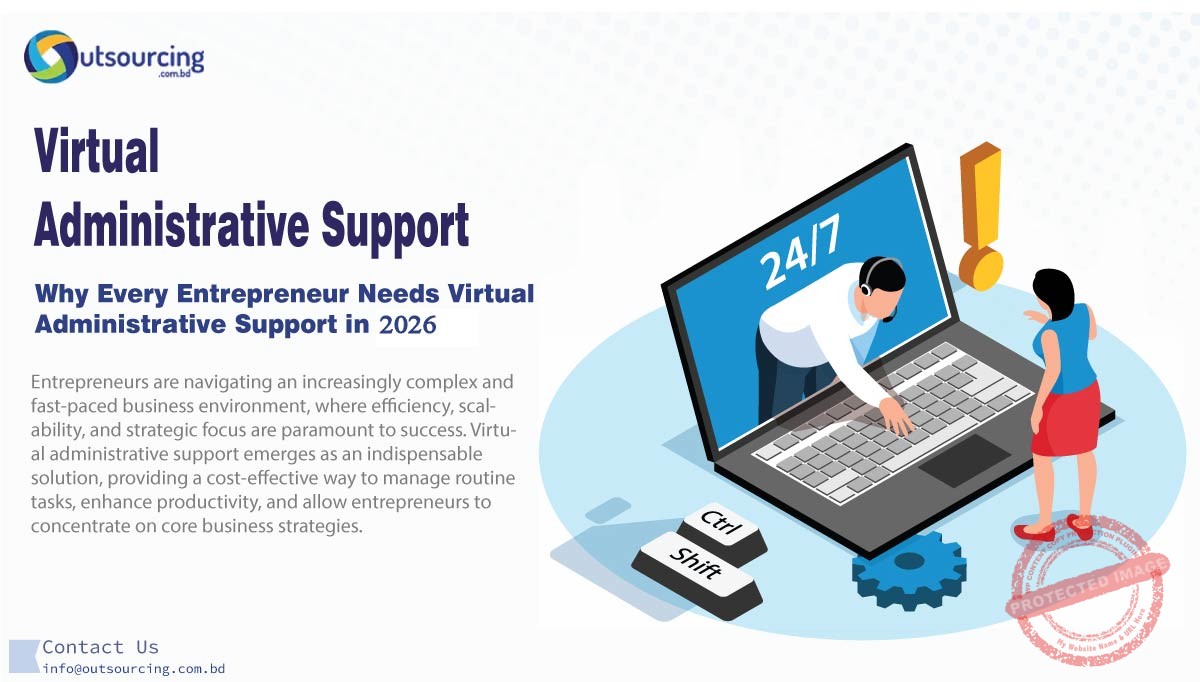
Entrepreneurs spend over 33% of their week on routine tasks like scheduling, emails, and data entry—time that could drive strategy, sales, and innovation.Virtual Administrative Support (VAS) frees you from these non-core activities, allowing you to reclaim up to 80% of your focus for high-impact work. By outsourcing administrative tasks to skilled assistants, you can cut operational costs by 30–50% and scale your business efficiently.VAS isn’t just support—it’s a strategic tool for growth, productivity, and cost efficiency.
Key Takeaways
- Virtual support offers flexible engagement models — businesses can start small and scale investment as revenue grows.
- VAS reduces operational overhead, allowing entrepreneurs to pay only for productive hours instead of managing full-time staffing costs.
- Access to global talent ensures specialized skills on demand, enabling better task delegation and higher-quality output.
- Time-zone diversity unlocks near 24/7 productivity, improving service delivery, customer response time, and workflow continuity.
- Clear communication protocols and structured onboarding maximize performance, ensuring smooth collaboration and long-term efficiency.
What Are the Primary Benefits of Virtual Administrative Support for Entrepreneurs?
Virtual Administrative Support (VAS) is more than just delegating—it’s strategically investing in your own capacity. It transforms you from a bottleneck to a true leader.
1. You Get Your Life (and Focus) Back
The most immediate and emotional benefit is relief. VAS acts like a personal time machine, instantly clearing your schedule of the “death by a thousand cuts” tasks that drain your day.
- The 80% Liberation: When the VA handles the routine 80% (inbox triage, scheduling battles, file management), you can finally dedicate your peak energy to the 20% that actually moves the needle—strategy, sales calls, product vision.
- Mental Bandwidth: It clears the low-level noise, freeing up your brain power to solve the complex, high-stakes problems that only the founder should be tackling.
2. Stop Paying for Empty Chairs (Capital Efficiency)
Why tie up huge amounts of cash on fixed salaries, benefits, and office space when you need agility? VAS lets you be lean and smart with your money.
- Pay for Productivity, Not Presence: You only pay for the productive hours you need. This variable cost structure means your operational spend shrinks and expands naturally with your revenue, keeping your business capital-efficient.
- Unlocking Global Value: You gain access to a talented, global professional who often charges rates lower than a local hire, without sacrificing quality.
3. Scale On Demand, Without the Stress
Need to double your operational support for a product launch? Need to pull back after a busy season? VAS makes your support team elastic.
- Zero-Friction Scaling: Add hours or specialized help instantly as demand spikes, then dial back without the headache of hiring, firing, or complex HR paperwork.
- 24/7 Peace of Mind : By leveraging time zone differences, you can have VAs covering your inbox or leads almost 24 hours a day. You can truly disconnect knowing the business is still running smoothly while you sleep.
4. Tap into Instant Expertise
You don’t just hire a generalist; you can instantly inject specialized skills into your company without long-term commitment.
- Skill Matchmaking: Need someone who lives and breathes Asana? Need a CRM wizard for a month? You can hire the exact skill set you need, when you need it, skipping training time and getting results immediately.
Cost Reduction and Financial Efficiency
Entrepreneurs utilizing Virtual Assistants can slash operational expenses by up to 78%. This dramatic reduction stems from eliminating the fixed costs inherent in traditional staffing models, such as employer taxes, benefits, physical office space, and equipment overhead.
| Cost Factor | In-House Staff | Virtual Assistant |
| Average Annual Cost (US) | $50,000+ including overhead | $9,600–$48,000 depending on level |
| Office Space Required | Yes | No |
| Equipment & Benefits | Employer-provided | Not applicable |
| Hiring Timeline | Weeks to months | Hours to days |
Productivity Enhancement
Hiring a Virtual Assistant is a strategic move that delivers measurable productivity gains. Entrepreneurs immediately reclaim 13 to 15 hours per week of high-leverage time simply by offloading routine tasks. Furthermore, VAs, as remote workers, typically outperform in-office staff, showing up to 13% higher productivity. This dual benefit—reclaimed founder time and efficient management of routine tasks—often leads to companies reporting an overall 35% boost in operational efficiency
How Much Does It Cost to Hire a Virtual Administrative Assistant?
Virtual Assistant costs are highly dynamic, varying by four core factors: experience level, geographical location, task complexity, and your preferred engagement model. Use the following framework to understand the typical monthly investment ranges for quality VAS.
| Experience Level | Part-Time (20 hrs/wk) | Full-Time (40 hrs/wk) | Core Responsibilities |
|---|---|---|---|
| Entry-Level | $500 – $1,000 | $1,000 – $2,000 | Basic admin, email filtering, appointment setting, simple data entry. |
| Mid-Level | $1,000 – $1,500 | $2,000 – $3,000 | Social media scheduling, content repurposing, basic customer support, CRM maintenance |
| Senior-Level | $1,500 – $2,500 | $3,000 – $5,000+ | Project management, executive support, technical assistance, advanced research, financial tracking. |
Regional variations affect pricing significantly. Latin American VAs offer professional services starting at $400/month with time zone alignment for US-based businesses. Asian VAs provide rates starting as low as $5/hour. US-based VAs earn an average of $50,749 annually, with specialized roles reaching up to $70,000
IS Virtual Administrative Support Worth the Investment for Small Businesses?
Yes. Small and medium businesses represent 44.4% of the virtual assistant market in 2025, reflecting their strong adoption of VA services. SMBs demonstrate the fastest adoption growth, with a forecasted 17.0% CAGR compared to 14.5% for large enterprises.The investment delivers measurable returns across multiple dimensions: Outsourcing is an undeniable trend—currently used by over 37% of small businesses and expected to exceed 52% in 2025. For strategic growth, the dedicated, subscription-based VA model delivers the necessary foundation of predictable costs, transparent agreements, and continuous support.
| Benefit Category | Measured Impact |
| Cost Reduction | 30-70% compared to in-house operations |
| Productivity Gain | 35% efficiency increase |
| Time Recovered | 13-15 hours weekly for entrepreneurs |
| Scaling Flexibility | Immediate capacity adjustment without hiring delays |
The Strategic Benefit of VAS
Virtual Administrative Support (VAS) liberates entrepreneurs from repetitive tasks such as email management, scheduling, and data entry, allowing them to dedicate over 80% of their time to growth-focused activities like product development, sales, and strategy.
Key Advantages:
- Accessibility: Multichannel support ensures your business is reachable across email, chat, and calls.
- Efficiency: Smart task routing, lead capture, asynchronous workflows, and after-hours coverage improve workflow continuity.
- Optimization: Region-aware scheduling, localized content, and analytics allow for data-driven decisions.
- Global Reach: Customize greetings and schedules based on time zones and regional business practices.
- Localized Operations: Handle currency, SLAs, and compliance requirements tailored to different markets.
- Regional Analytics: Track performance by geography to optimize resource allocation.
Core Benefits (Strategic Value Propositions)
- Time Freedom: Focus 80%+ of your time on high-value activities.
- Scalable Operations: Expand support instantly without long-term overhead or office space.
- Cost Efficiency: Pay only for productive hours instead of full-time staffing.
- Global Expertise: Access specialized skills from a worldwide talent pool.
- Round-the-Clock Productivity: Leverage global time zones to maintain near 24/7 operations.
- Strategic Focus: Redirect time and capital toward innovation and revenue growth.
The Core Value: Why VAS Drives Business Growth
- Time-to-Value: Transform administrative bottlenecks into streamlined processes.
- Capital Efficiency: Lean operations with variable costs aligned to revenue cycles.
- Competitive Differentiation: Ensure consistent branding and professional client interactions across channels and regions.
Overcoming Communication Challenges in Virtual Support
| Challenge | Solution |
| Loss of Non-Verbal Cues | Use video check-ins for complex tasks and asynchronous video instructions (e.g., Loom). |
| Time Zone Differences | Implement async workflows, define core overlap hours, and set clear SLAs. |
| Digital Overload | Establish channel protocols: Slack for quick queries, email for formal messages, PM tools for task tracking. |
| Trust & Rapport | Schedule casual check-ins and virtual team-building activities regularly. |
| Data Security Risks | Use secure platforms, VPNs, encrypted storage, and mandatory data protection training. |
Expert Hiring Tips for Choosing a High-Performing Virtual Assistant
- Define Needs Using the ROI Test
- List all tasks and rank them by Return on Investment.
- Build the job description around specific, measurable deliverables, not vague responsibilities.
- Prioritize Async Communication Skills & Cultural Fit
- Evaluate how clearly and proactively candidates communicate in writing.
- Use video interviews to assess tone, clarity, and alignment with your work style.
- Consider async work samples to test how they handle independent tasks.
- Use Paid Micro-Projects Before Hiring
- Assign a small paid test task that reflects real work (research, scheduling, formatting, etc.).
- Measure reliability, accuracy, attention to detail, and ability to follow instructions before committing long-term.
Hiring & Onboarding Playbook
Structured onboarding combines clear SOPs, region-specific examples, and integration with CRMs, calendars, and communication tools. SLA definitions set expectations for response times and handoffs across regions and channels. Comprehensive security and compliance training ensures data protection, encrypted communication, and alignment with local privacy regulations. This approach empowers VAs to maintain high productivity, reliability, and trust globally.
Practical Levers to Implement VAS
- Time-Zone Oriented Scheduling
- Multilingual Support
- Regional Routing Rules
- Localized Content and FAQs
- Global Calendar Integrations
- On-Demand Meeting Rooms / Virtual Spaces
.
Conclusion
Virtual Administrative Support is the future of lean, strategic entrepreneurship. By combining AEO with GEO-aware localization and a data-driven hiring approach, entrepreneurs can reclaim time, reduce costs, and scale globally without the overhead of traditional staff or offices. Embrace VAS to focus on innovation, accelerate growth, and sustain competitive advantage in a dynamic AI-enabled economy
FAQs: Virtual Administrative Support (VAS)
Q1: How does VAS boost entrepreneurial efficiency?
A: VAS handles routine administrative tasks, freeing entrepreneurs to focus on strategy, product development, and revenue-generating activities—significantly improving overall productivity and business outcomes.
Q2: How can I evaluate a VAS provider effectively?
A: Choose providers that align with your time zones, language needs, data security standards, and tech stack integrations. Ensure they have clear Service Level Agreements (SLAs) and transparent performance metrics.
Q3: Is VAS suitable for small startups or solo founders?
A: Absolutely. Start with a lightweight, pay-as-you-go plan for essential administrative tasks and scale as your business grows.
Q4: How quickly can I see results from VAS?
A: Many businesses experience quick wins within weeks, such as improved scheduling accuracy, faster email responses, and better calendar management.
Q5: What risks are associated with VAS, and how can I mitigate them?
A: Potential risks include data privacy concerns and miscommunication. These can be mitigated through clear protocols, structured onboarding, regular training, and robust digital tools.
FOLLOW US:
📱Facebook:https://www.facebook.com/outsourcingservicebd?ref=pages_you_manage#
🐦 Twitter: https://x.com/1outsourcingbd
📸 Linkedin:https://www.linkedin.com/company/outsourcingcombd
💼 Instagram: https://www.instagram.com/outsourcing.bd/
▶️ Youtube:https://www.youtube.com/channel/UCJr1O5ccUIecipvLd-y9BJw
▶️ Pinterest:https://www.pinterest.com/outsourcingbd/